
Start with three questions before you open the closet
Most mornings that feel like "nothing to wear" are really missing information. You are staring at forty hangers with no brief. Give yourself the brief first and the choice shrinks fast.
Ask where you will spend the most hours, not where you start the day. If you commute in a stuffy train and then sit in a cold office, dress for the office with a layer you can shed. Ask what you will be doing with your body. Sitting through back to back meetings, chasing a toddler, walking across a campus and standing at a party in heels all want different fabrics and shoes. Then ask who sees you and what they expect. A client lunch, a first date and a Saturday errand run each have a different floor and ceiling for effort.
Write those three answers in a phone note if you need to. It takes thirty seconds and stops you from changing three times.
What to wear for the weather
Weather decides fabric and layers before it decides style. Check the forecast for the hour you leave and the hour you come home, because the gap between them is where people get caught out.
Cold or damp days
Build in thin layers rather than one thick piece. A tee or fine knit against the skin, a mid layer such as a sweater or overshirt, and a coat on top lets you adjust. Wool and wool blends keep you warm even when slightly damp. Cotton sweatshirts feel fine until they get wet and then stay cold. Boots with a real tread beat flat canvas sneakers on slick sidewalks. Men can add a scarf and a beanie, women can slip tights under trousers. Both are small changes with a big effect.
Hot and humid days
Pick loose, breathable fabrics. Linen and lightweight cotton move air, while polyester knits and anything clingy trap it. Mid tones such as sage or a washed blue often look fresher by evening than white, which shows every mark. Wide-leg trousers, a loose shirt, a sundress with a straight cut and leather sandals all work. Keep a light cardigan or overshirt in your bag for air conditioning.
Days with a big temperature swing
This is where layering earns its place. Wear a base you are happy in alone, such as a good tee or a button-up with the sleeves rolled, and add one easy layer, like a denim jacket, a light blazer or a zip knit. Carry it rather than tying it on, and choose shoes for the walking you will do, not the photo you will take.
What to wear by occasion and dress code
Dress codes are shorthand. Here is what the common ones mean in practice, so you can read an invitation without guessing.
| Dress code | For men | For women |
|---|---|---|
| Casual | Clean jeans or chinos, a tee or casual shirt, sneakers | Jeans or a relaxed skirt, a simple top, flats or sneakers |
| Smart casual | Dark trousers, an oxford shirt or knit polo, loafers or leather sneakers | Tailored trousers or a midi skirt, a blouse or fine knit, loafers or low heels |
| Business casual | Chinos, a button-up, a blazer or sweater, leather shoes | Trousers or a knee-length skirt, a blouse, a blazer or cardigan, closed shoes |
| Cocktail | A dark suit, or a blazer with trousers, a shirt, optional tie | A knee or midi dress, or a dressy separates set, with heels or dressy flats |
| Black tie | A tuxedo, white shirt, bow tie, polished black shoes | A floor-length gown or a very formal evening look |
If the invitation says nothing, ask the host one question. "Is it more dressy or more relaxed?" People like being asked, and it beats showing up in the wrong register.
Job interviews and first days at work
Dress one notch above what the team wears daily. For a creative or startup office, that may be dark jeans, a crisp shirt and a blazer. For a bank or law firm, it means a suit. Check the company's team page or social photos to see what people actually wear, and make sure everything fits without adjusting. Shoes should be clean and comfortable enough to stand in. You do not want to think about your outfit mid-answer.
Dates, parties and weddings
For a date, choose something you have already worn and felt good in, because comfort reads as confidence. For a party, ask whether you will be standing or sitting and pick your shoes to match. For a wedding, skip white and anything that competes with the couple, check whether it is indoors or outdoors, and follow the time of day. Daytime leans lighter and shorter, evening leans darker and longer.
Outfit formulas that work without thinking
Formulas are the reason stylists can dress people quickly. You pick a pattern once and swap the pieces.
- Anchor plus neutral plus one detail. A statement jacket, plain trousers and plain shoes, with one accessory such as a watch, earrings or a well-chosen hat.
- Tonal. Different shades of the same color, like camel, cream and tan. It looks planned even when it took two minutes.
- Fitted plus loose. A slim top with wide trousers, or a roomy shirt with straight jeans. Keeping one half closer to the body stops the outfit from looking like two oversized pieces.
- Uniform. Choose a go-to, such as white shirt, dark jeans and boots, and keep three or four versions of it in the closet.
Whatever formula you pick, the idea is the same. Fewer decisions make better outfits.
What to wear with the item you already own
Often the real question is what to wear with one specific piece you love. Start by naming it properly. Is that jacket a bomber, a blazer or a chore coat? The name tells you what it likes. A bomber works with slim or straight trousers and clean sneakers. A blazer goes with almost anything if the cut suits you, and it can dress down jeans or sharpen a tee.
For a bold piece, such as a printed shirt or a bright skirt, keep everything else quiet. Pull one color out of the print and repeat it in your shoes or bag. For a neutral piece, add texture rather than more color. Suede with denim, knit with satin and leather with cotton all work.
Only have a photo of the piece, or spotted it on someone and lack the word for it? The scanner above describes the cut and suggests what could go with it. That gives you the vocabulary to look at it with fresh eyes. To track down the exact item, try finding out what brand a piece is.
Getting ideas from photos you already have
Your saved photos hold a pattern. Scroll back through screenshots and pictures of yourself that you liked, and notice what repeats. It is usually a silhouette or a color range, not a single item. Pinterest says its Lens feature can use a camera view of street style to find related clothing and outfit ideas. Back in 2019 Google launched Style Ideas in the US, which shows how others style garments like the one you are looking at. Both give you raw inspiration, but neither replaces looking at what you already own.
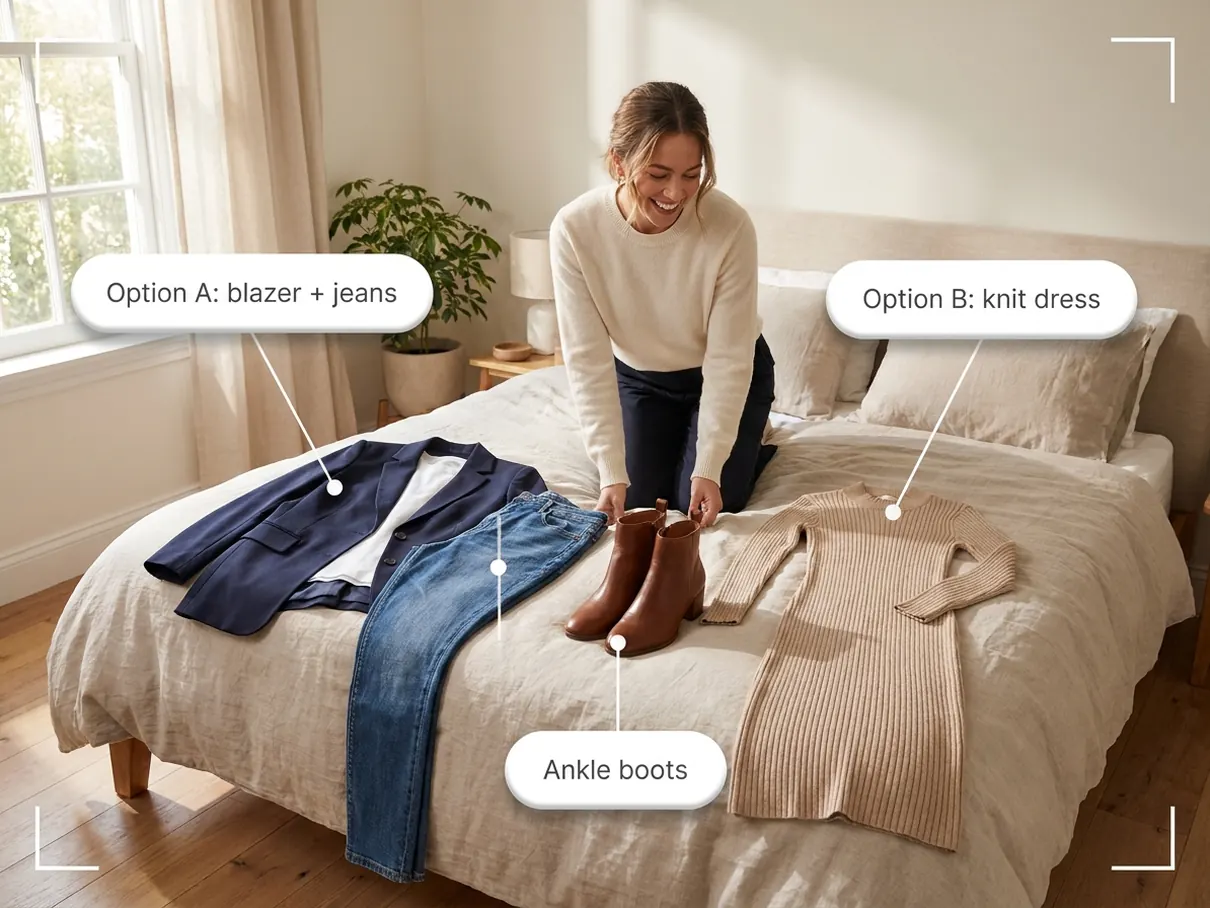
Lay two or three options on the bed and compare them in daylight. Colors that looked right in a dim closet can turn flat or harsh. When an outfit works, take a photo and keep it in an album called "done". On a rushed day, you pick one.
When you want a full set built around a piece, an outfit generator can produce several combinations to compare. For feedback on something you have already put on, read about using an outfit checker.
What to wear when you do not know what to wear
Some days no formula helps because the problem is mood. A few quiet fixes work more often than any new purchase.
- Pull out the last three things you wore that felt easy. Start with those.
- Choose the shoes first. Shoes tell you how formal the day is and often limit what fits.
- Pick one piece you enjoy looking at, and let it lead.
- Put the outfit on, then sit, bend and reach for something. If you notice it, change it.
- Stop at the first outfit you would be happy to be photographed in.
The most common mistakes are wearing something new that has not been tested for comfort, ignoring the weather because the outfit looks better, and over-accessorizing to rescue a look that does not work. If a look feels off, remove one item before adding anything.
Building a closet that answers the question faster
A closet that makes mornings easy is not big. It is coordinated. Pick a base palette of two or three neutrals, such as navy, gray and white, or black, cream and camel. Add one or two accent colors you really like. Everything then mixes with everything else.
Own at least one reliable version of each job. For men, that means dark jeans, chinos, a white and a blue shirt, a sweater, a jacket and two pairs of shoes, one casual and one smarter. For women, dark jeans, tailored trousers, a skirt or dress that works in two settings, two tops that go with everything, a blazer, a coat and comfortable shoes in two levels of dressiness.
When you buy, check the fit on the day, not a hoped-for day. Clothing sizes are not standardized worldwide, so an M or an 8 in one shop can fit differently in another. Go by the brand's own measurements, not the number on the tag. If a piece needs a small tailoring fix, such as a shorter hem or a taken-in waist, it is usually worth it.
If a look from a photo stuck with you and you want it in your own closet, shop the look shows how to break a full outfit into pieces you can search. To see what software can and cannot do for your wardrobe, read about an AI stylist.
For anything that caught your eye on the street, start with finding outfits from a photo and take the details from there.
Still unsure what to put on?
What should I wear today if I have no plan?
Check the forecast first, then think about where you will spend most of the day. Pick one piece you like, such as a good jacket or a favorite pair of jeans, and add a neutral top and comfortable shoes. If you cannot decide, wear the last outfit that felt easy. A familiar combination beats an experiment on a busy day.
What is the 3-3-3 rule for clothes?
A common reading is to pick three tops, three bottoms and three pairs of shoes and mix them into outfits. The exact numbers vary from one version to the next. What carries over is the idea. Limit the pieces you rotate, and choose items that already go together so mornings need fewer decisions.
What color makes you look expensive?
Deep, even tones such as navy, charcoal, camel, cream and dark green tend to read as polished. Fit, pressed fabric and clean shoes matter as much as color. A wrinkled silk blouse looks cheaper than a well-fitted cotton tee. Keep your palette to two or three colors and repeat one in an accessory.
What should I wear to a job interview?
Dress one step above the daily dress code at that workplace. Check the team page or social photos to see what people wear. Choose clothes that are ironed and feel comfortable when you sit and stand. Closed, clean shoes and minimal accessories keep the focus on you. Skip anything new that you have not worn for a full day.
What should I wear when the weather keeps changing?
Layer thin pieces that work alone. Start with a base you are comfortable in, add a light layer such as a denim jacket or zip knit, and carry a compact outer layer if rain is possible. Choose shoes for the longest stretch of the day, and keep an extra layer in your bag.
What should I wear to a wedding as a guest?
Read the invitation for the dress code and the time of day. Avoid white or ivory and anything that competes with the couple. Daytime outdoor weddings suit lighter fabrics and shorter lengths. Evening events suit darker colors and longer cuts. Men can wear a suit or a blazer with trousers, women a dress or tailored separates. Comfortable shoes matter on grass.
What should I wear to temples or more conservative places when traveling?
Customs vary by country and setting, so there is no single rule. In offices, temples and shrines, many people keep shoulders and necklines covered, while casual city streets are more relaxed. Pack a light layer such as a shirt or scarf you can add, and follow what locals wear that day.
How can I look put together fast?
Choose one tidy base, such as dark jeans or tailored trousers, with a top that suits you and clean shoes. Add one layer with structure, like a blazer or a chore coat. Pressed or steamed fabric makes a bigger difference than extra accessories. Before you leave, remove one item from your outfit.