
One logo is a weak clue, five details are a strong one
People ask about a bag with a photo of the front and a vague color. That rarely works. A single logo proves less than the combined match of shape, size, hardware, material, closure and interior. Plan to collect at least five of those, and the sections below show where each one hides.
Bag shapes for women and men, in plain words
Shape comes first because every store sorts by it. The terms below overlap, and brands use them loosely, so use each term as a rough filter, not a final label.
Shapes you see on women's bags
- Tote. An open top and two handles, often with a structured base and long handles.
- Shopper. Usually simpler and more open than a tote, with less structure.
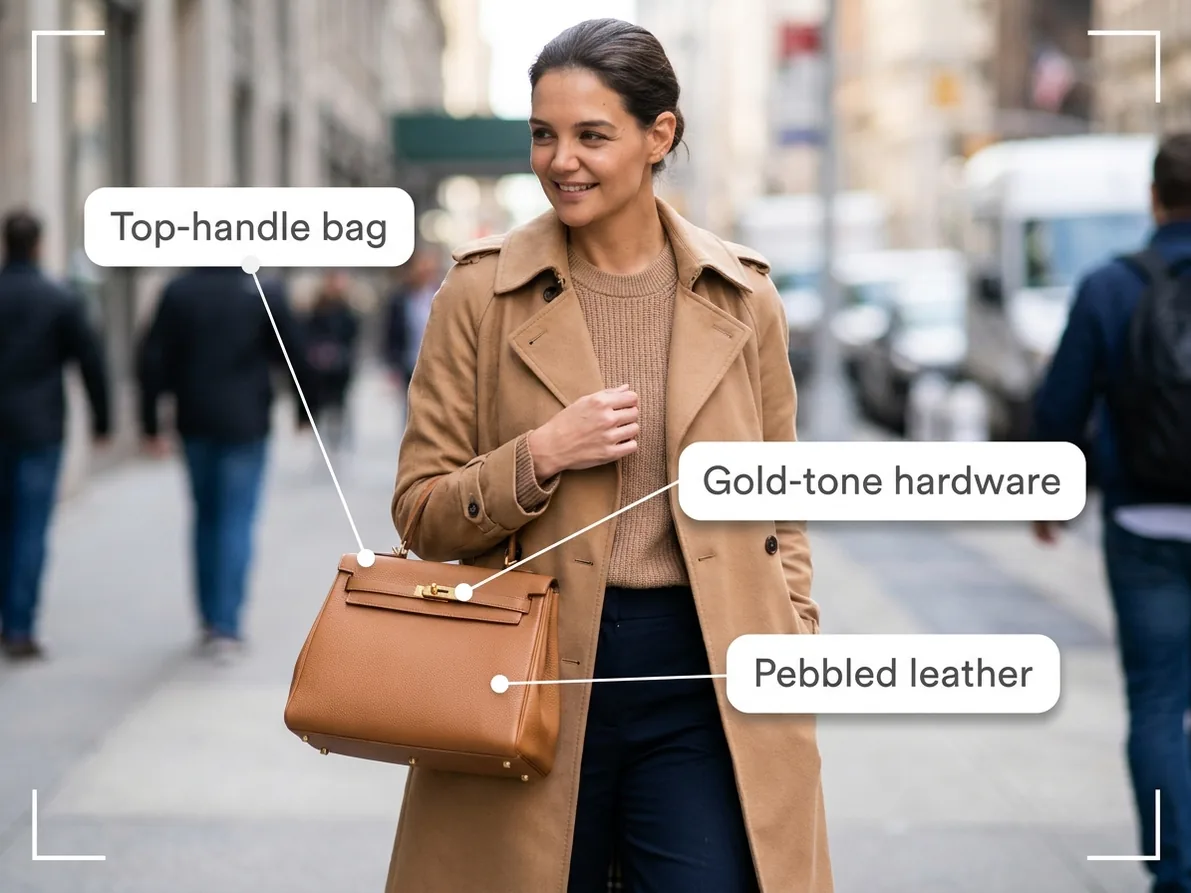
- Top-handle bag. A rigid body carried by one short handle or two, sometimes without a shoulder strap.
- Satchel. Structured, often with a removable shoulder strap as well as handles.
- Shoulder bag. Keeps its shape and hangs from a single strap on one shoulder.
- Hobo. A soft, curved body that slouches when you set it down.
- Bucket bag. A rounded, upright body, often closed by a drawstring.
- Crossbody. Carried on a long strap across the torso, from tiny phone bags to larger ones.
- Clutch. No strap, or a removable one, carried in the hand.
Shapes you see on men's bags
Menswear leans on a few classics. Messenger bags have a long flap and a cross-body strap. Briefcases and structured work bags have a rigid body and top handles. Duffels are cylindrical with two handles. Backpacks range from rolltop to flat-pack. Sling bags and belt bags are small and worn at the chest or waist. Totes in canvas or leather appear on both sides of the racks, so a tote photo alone does not tell you the market it was built for.
A slouchy hobo and a structured shoulder bag can look alike from a few feet away. Check whether the body holds a firm line or sags at the middle. That one test separates them.
What hardware tells you
Hardware is the metal on the bag, and it is harder to copy well than leather. Look at the finish first. Gold, silver, palladium, brass, black and mixed metal all read differently in daylight, and many models appear in more than one finish. Then check the shapes. Turn-locks, buckles, rings, chain links, zipper pulls, studs and the small protective feet on the base are all useful. A zipper with a distinctive pull is worth its own close-up. So is any engraving on a clasp.
The closure shapes the search, too. A zip, a flap, a turn-lock, a magnetic snap, a drawstring, a clasp and an open top each narrow the model list. A flap bag and an envelope clutch can pass for each other, so compare depth, how the handle or chain is attached, the geometry of the flap and the compartments inside.
Straps, handles and attachment points
Count the handles. Note the drop length, which is how far the handle hangs when you lift it, and the way it attaches to the body, whether through a ring, a stitched tab or a rolled loop. Check whether the strap is removable or adjustable, and whether it is made of leather, chain, woven fabric or webbing. A bag shown with a different strap than usual can send you to the wrong listing.
Stitching, edges and material
Stitching is a fingerprint. Count the stitches along a seam, check the spacing, the thread color and how the edge is finished. On leather bags, look at the edge paint. Smooth edge paint, a folded edge and a raw edge each say something about how the bag was made.
For material, tell grained leather from smooth leather, then suede, canvas, nylon, raffia, patent and exotic skin. The same pattern can come in many of these. A quilted lambskin look and a matte caviar-style grain can be the same model with different sheen, so do not reject a candidate only because the surface differs.
Also note quilting, woven construction, perforations, studs, piping and any distinctive panels. They are model-level details that repeat across colors.
Look inside the bag
The interior is where many models separate. Photograph the lining color and material, the interior pockets, any label, a date code or serial number, and the care tag. Some luxury bags carry a microchip, and a visible indication of one is another clue. If the bag has an internal zip pocket, check where the label sits relative to it.
How to take photos that get a result
A bag needs more angles than a shoe. Use daylight and a plain background if you own the bag. Without one, use these steps.
- Save the clearest original and crop so the bag fills most of the frame. Keep one uncropped copy for scale.
- Photograph the front, the back, the side and the base.
- Take close-ups of the logo, the hardware and the interior label.
- Open the bag and shoot the lining.
- Measure width, height and depth with a ruler or tape and record all three in inches.
Screenshots lose detail through compression, so use the original image when you can. If all you have is a street photo of a stranger's bag, the scanner above can describe what it sees and rate its own confidence. Think of that as a tidy list of search words.
Searching with Google Lens and with words
Start with Google Lens. Google says Lens can identify products and show prices, reviews, retailers and similar items. Google also gave a figure of nearly 20 billion visual searches monthly as of October 2024, along with a Shopping Graph holding over 45 billion product listings. Lens accepts a camera photo, an uploaded image or a screenshot.
Run the full bag, then run the logo, the hardware, the interior and any serial label separately. Add text to refine a result, such as "crossbody", "medium" or a color name. Google says Lens can combine an image with words to narrow pattern, color, product type or size. A search for "black leather shoulder bag" gets lost, so describe construction. "Quilted flap, chain strap, turn-lock" does better.
If the same photo has more going on than the bag, a free outfit finder for photos can break down the clothes around it as well.
Check candidates against real references
When Lens hands you a handful of options, list each one's brand, model, size, material, color, dimensions, hardware, lining and stated year. Compare them with official product pages, brand archives, reputable resale listings and dated editorial photos. Brand sites help with model names, dimensions, materials, color names and collection dates, though coverage of old models varies.
Use your tape measure. Reject any candidate whose published dimensions or proportions do not match, because scale in photos is unreliable. Camera distance and the height of the person carrying the bag both distort it.
For luxury handbags there are dedicated tools too. Coveteur reported in 2021 that Rebag's Clair recognition service covered more than 50 brands and 15,000 Clair codes, returning a model and an estimated resale value, and could offer up to five candidate options when it was unsure.
Same model, different year or size
Mini, small, medium and large versions of a model look alike in photos, so compare published measurements and not visual scale. Seasonal reissues add another layer. A model name can survive while the leather, lining, hardware, logo placement or dimensions change from year to year. A current website photo may not match an older bag, so look for dated images of the right season.
Different brands also make similar designs. Search by distinctive construction details instead of generic terms. If the bag turns out to be pricey, a dupe search for look-alike bags can find lookalikes without chasing the original.
Prices, resale and counterfeits
Price is a clue, not proof. Bag dimensions, price and production year stay uncertain until you confirm the exact model, size, condition, market and date. Write the date next to every price and note whether it is retail, resale, sold or asking.
Authenticity is a separate question from identification. A match from a visual search is not proof of anything. To check, compare logo spacing, stitching, hardware engraving, date or serial format, lining, edge paint, symmetry and overall construction against trusted reference images. When the bag is expensive, disputed or suspected, hire an independent authenticator. Ask about their qualifications, what the inspection covers, their liability and the refund policy in writing.
Be careful with accusations. A search result is not enough to tell a seller their bag is fake. And do not buy an expensive bag from an image alone, especially if the seller refuses extra photos or an independent inspection.
Keeping your photo private
Crop out faces, receipts, shipping labels, addresses and anything private in the background. Strip metadata if you can. Read an app's storage, retention and deletion terms before you submit pictures, since policies differ.
Common ways a bag search goes wrong
- Typing a generic phrase like "black purse".
- Mistaking a similar model for the exact one.
- Ignoring size variants.
- Treating a logo match as final.
- Comparing photos shot with different lenses, angles, lighting or scale.
- Trusting one AI result when its maker has published no validated accuracy rate.
- Working from a single low-resolution front photo when the decisive detail is on the base, inside or label.
- Quoting a year, price or model name with no source or date.
Once the bag is named, build around it. The outfit generator can suggest what to wear with it, and a matching pair is easier to pick from a guide to naming shoes.
Label your final answer honestly as confirmed, probable, possible or unknown. If you cannot get above possible, say so to yourself before any money changes hands.
Bag ID questions
What is the difference between a satchel and a top-handle bag?
A satchel usually has a structured body and a removable shoulder strap, so you can carry it by hand or over the shoulder. A top-handle bag is carried by one or two short handles and may not come with a strap at all. Brands use these words loosely, so check the product page before relying on either.
How do I find a purse if I only have a screenshot?
Run the screenshot through Google Lens, then crop tightly on the bag and search again. Add words for the shape, material, color and closure. Screenshots lose detail through compression, so look for the original post. Sharp close-ups of the hardware and any visible logo will give you much better matches than the full picture.
Why do two bags of the same model look different?
Brands change a model between seasons. Leather, lining, hardware finish, logo placement and even dimensions can shift from one year to the next. Size versions also look alike in photos. Compare the published measurements and dated images of the right season before deciding that two bags are different models.
Can an app tell me if a handbag is real?
No. A visual result can point to a model, but it is not professional authentication. Real checks compare logo spacing, stitching, hardware engraving, date or serial format, lining and edge paint against trusted references. For an expensive bag, use an independent authenticator and ask about their qualifications, liability and refund policy first.
Where is the serial number on a handbag?
Brands differ on this. Look inside, on the lining, on a leather tab sewn into a seam, or under an interior pocket. Some bags carry a date code, others a microchip indication or a care tag with numbers. Photograph each label flat and compare its format with trusted references for that brand.
How do I measure a bag for a search?
Measure width, height and depth in inches with a ruler or tape, and note the handle drop if it has one. Then compare against a candidate's published dimensions. Do not judge size from a photo, because the lens distance and the height of the person carrying the bag both change how big it looks.
What are men's bag styles called?
The common ones are the messenger bag with a long flap and a cross-body strap, the structured briefcase, the cylindrical duffel, the backpack, the sling bag and the belt bag. Leather and canvas totes are sold to men and women alike. Searching by one of these names plus a material narrows results quickly.
Should I trust a bag that costs far less than the retail price?
Be careful. Price is a clue, not proof, and an asking price is not an achieved price. Date-stamp every number you compare. If a seller will not give extra photos of the base, interior and hardware, or will not allow an independent inspection, walk away from an expensive bag.